Users versus admins in an ibl.ai app — the User/Admin view switch, the isTenantAdmin() rule, an admin area (users and invitations, roles and policies, analytics, billing, memory, organization) that only org admins see, and where each admin surface comes from in the SDK. Use when the user mentions admin, administrators, user management, roles, permissions, invite users, admin dashboard, "who can", or wants some pages hidden from regular members. For agent-level sharing see /iblai-vibe-agent-ac...
Scanned 9/20/2026
Install to Claude Code
npx -y skills add iblai/vibe --skill iblai-vibe-admin --agent claude-codeInstalls into .claude/skills of the current project.
Are you the author of Iblai Vibe Admin?
Add the live security badge to your README — it updates automatically with every re-scan.
[](https://www.skillsdirectory.com/skills/iblai-iblai-vibe-admin)More formats (shields.io, HTML) on the badges page.
---
name: iblai-vibe-admin
description: Users versus admins in an ibl.ai app — the User/Admin view switch, the isTenantAdmin() rule, an admin area (users and invitations, roles and policies, analytics, billing, memory, organization) that only org admins see, and where each admin surface comes from in the SDK. Use when the user mentions admin, administrators, user management, roles, permissions, invite users, admin dashboard, "who can", or wants some pages hidden from regular members. For agent-level sharing see /iblai-vibe-agent-access; for the RBAC model see /iblai-vibe-rbac; for the SDK Account page see /iblai-vibe-account.
globs:
alwaysApply: false
metadata:
kind: ui
---
# /iblai-vibe-admin
> **First time here?** If `iblai.env` has no `ARCHITECTURE=`, run `/iblai-vibe-start` first (four questions; two minutes) — it decides single-org / multi-org / headless and who signs in, and every skill reads the answer.
Every app on the platform has two audiences: **members** (they sign in and
use the app) and **org admins** (they manage users, agents, spend, memory,
and branding). This skill is the pattern vibe-starter uses for both, and the
map of every admin surface the SDK already ships.
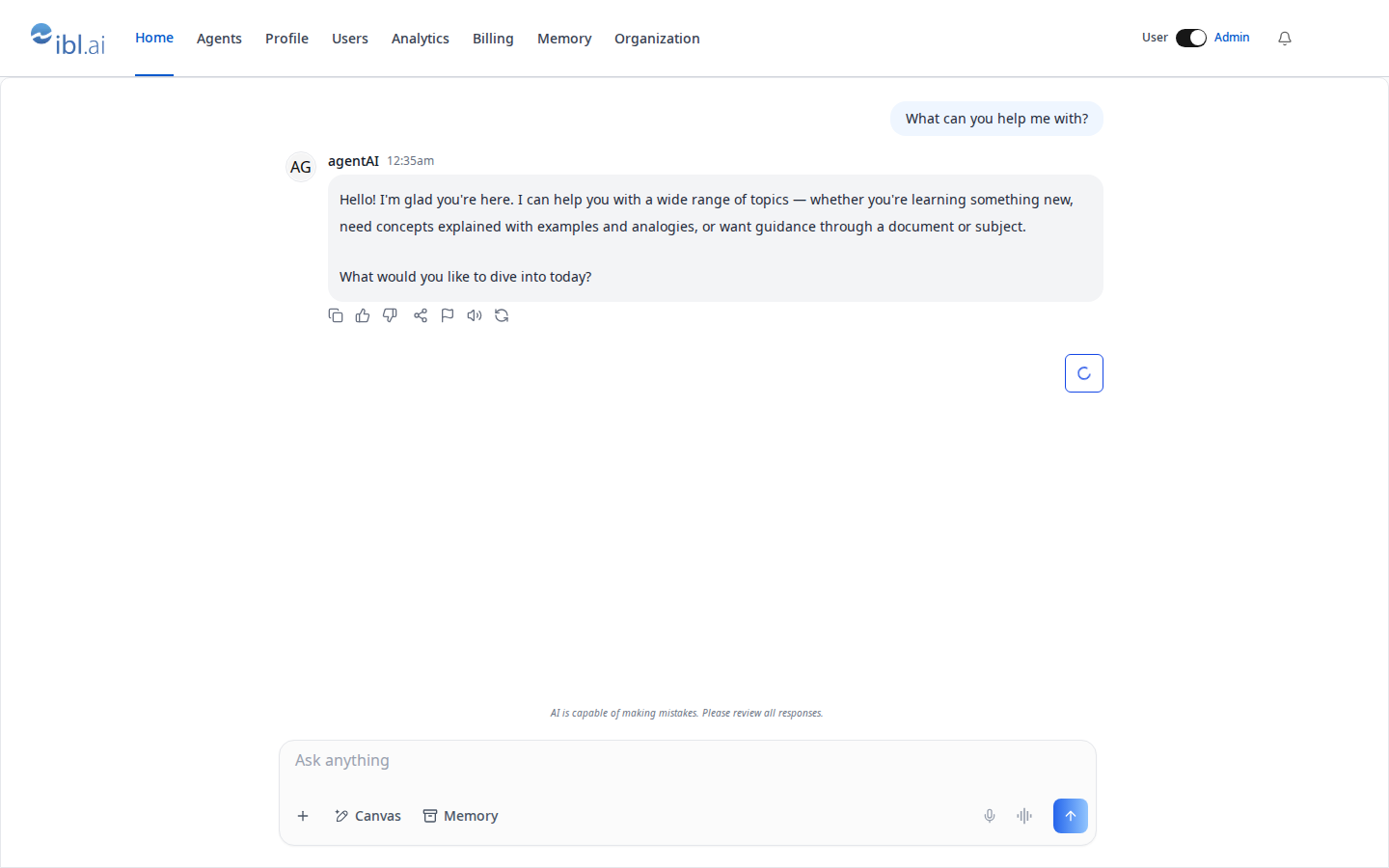
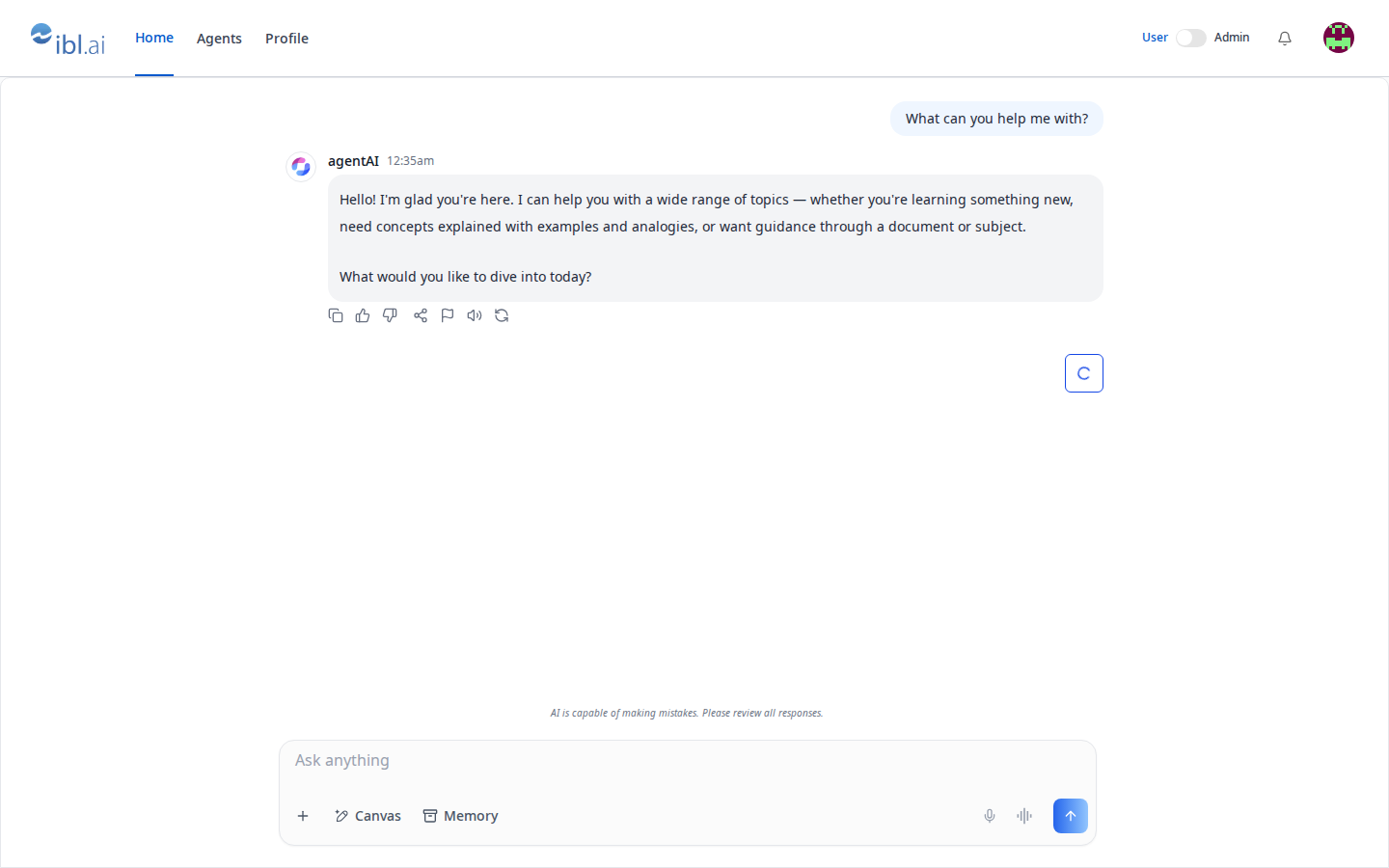
> **Common setup (brand, conventions, env files, verification):** see [docs/skill-setup.md](https://raw.githubusercontent.com/iblai/vibe/refs/heads/main/docs/skill-setup.md).
## The model in three sentences
- The platform has two predefined roles per org — **Admin** and **User** —
plus optional **policies** (RBAC) for finer grants; an admin implicitly
holds every policy.
- An app learns who is an admin from the `tenants` list the sign-in stored:
`isTenantAdmin()` = the `is_admin` flag on the entry whose `key` is the
org the app is pinned to. **Not** the SDK's `useIsAdmin()`, which answers
for the SDK's *current* organization — they can differ.
- Admins get a **User / Admin switch**; in User mode they see exactly what a
member sees. Admin-only UI gates on `adminMode` (admin *and* switched on);
anything that must stay admin-only regardless of the view gates on
`isTenantAdmin()`.
Until your app has an admin area, **os.ibl.ai is your admin console**: Admin
mode → settings → Management / Integrations / Billing / Memory / Organization.
## What you get (vibe-starter ships it)
| Piece | File | Does |
|---|---|---|
| `isTenantAdmin()`, `readTenants()` | `lib/iblai/tenant.ts` | the rule above |
| `AdminModeProvider`, `useAdminMode()` | `lib/iblai/admin-mode.tsx` | view state: default Admin, resets on reload |
| `AdminModeSwitch` | `components/navbar/admin-mode-switch.tsx` | the switch (hidden for members) |
| `AccountPanel` | `components/admin/account-panel.tsx` | one SDK `Account` surface opened on a tab, full-width |
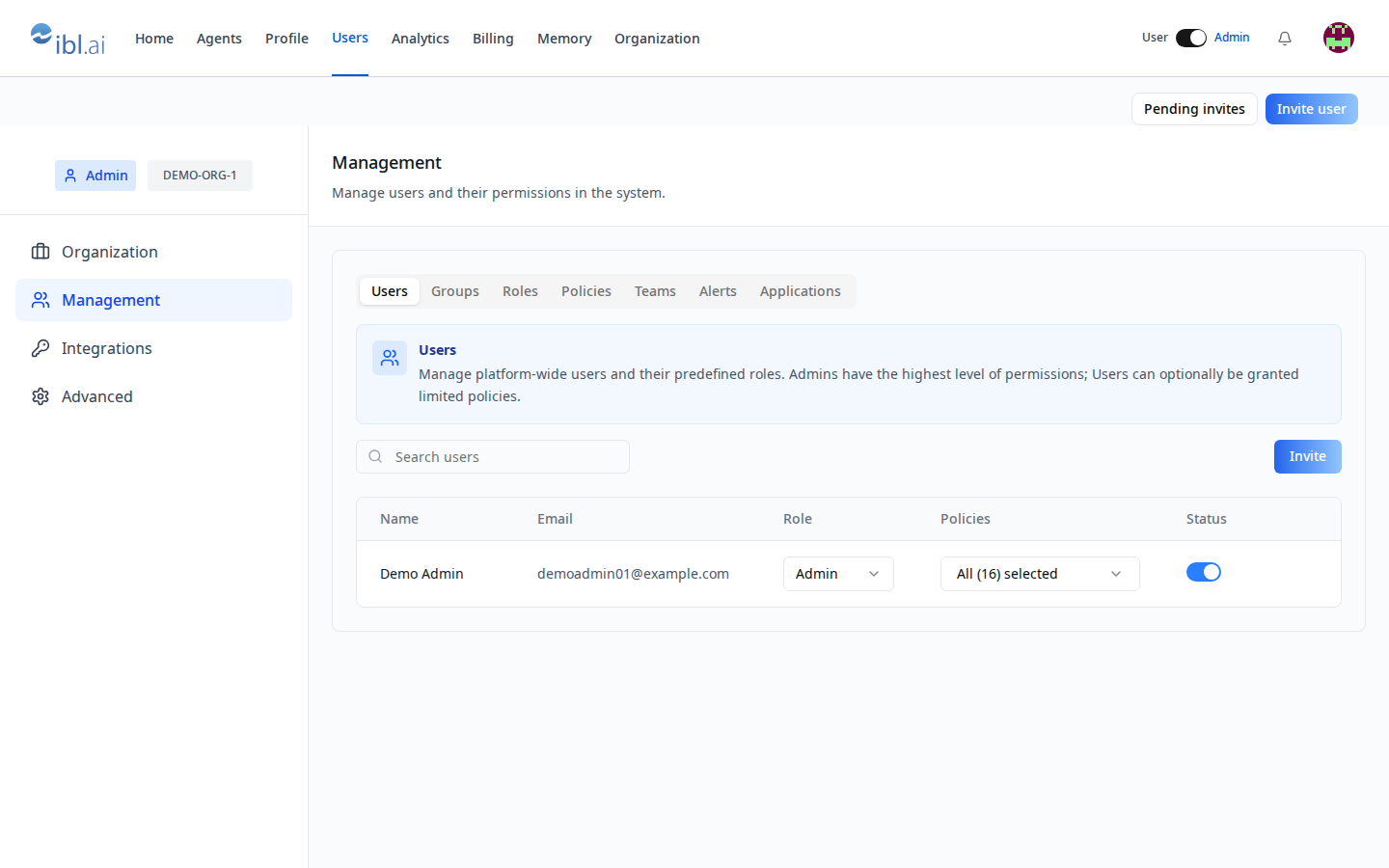
| `/admin/users` | `app/(app)/admin/users/page.tsx` | Users · Groups · Roles · Policies · Teams · Alerts + `InviteUserDialog` / `InvitedUsersDialog` |
| `/admin/analytics/*`, `/admin/billing`, `/admin/memory`, `/admin/organization` | `app/(app)/admin/…` | `/iblai-vibe-analytics`, `-billing`, `-memory`, `-org-metadata` surfaces |
| route gate | `app/(app)/layout.tsx` | admin links only when `adminMode`; `/admin/*` redirects home otherwise |
| `requireAdmin(req)` | `lib/iblai/platform.ts` | server-side proof for admin routes (`/iblai-vibe-api`) |
## Step 1: Install (existing app)
Render the assets (strip `.j2`; no variables): `admin-mode.tsx.j2` →
`lib/iblai/admin-mode.tsx`, `admin-mode-switch.tsx.j2` →
`components/navbar/admin-mode-switch.tsx`, `account-panel.tsx.j2` →
`components/admin/account-panel.tsx`, `admin-users-page.tsx.j2` →
`app/(app)/admin/users/page.tsx`, `tenant.test.ts.j2` →
`__tests__/tenant.test.ts`. Add `readTenants` / `isTenantAdmin` to
`lib/iblai/tenant.ts` (copy them from vibe-starter). Needs shadcn `switch`.
## Step 2: Wire the layout
In the authenticated layout: read the session once, wrap the tree in
`AdminModeProvider`, split nav links into member and admin arrays, render the
admin ones only when `isAdmin && adminMode`, and redirect `/admin/*` home
otherwise. vibe-starter's `app/(app)/layout.tsx` is the reference — copy it.
```tsx
const liveAdmin = isAdmin && adminMode;
const links = liveAdmin ? [...MEMBER_LINKS, ...ADMIN_LINKS] : MEMBER_LINKS;
useEffect(() => {
if (pathname.startsWith("/admin") && !liveAdmin) router.replace("/");
}, [pathname, liveAdmin, router]);
```
Put `<AdminModeSwitch />` in the navbar's right cluster (and in the profile
menu on narrow screens if you have one).
## Step 3: Pick the admin surfaces
`AccountPanel tab="…"` mounts the SDK `Account` on one of: `organization`,
`management`, `integrations`, `advanced`, `billing`, `memory`,
`monetization`. Each is documented by its own skill:
| Admin need | Tab / component | Skill |
|---|---|---|
| Users: role Admin/User, policies, activate/deactivate, search | `management` → Users | this skill; REST [management](https://raw.githubusercontent.com/iblai/vibe/refs/heads/main/skills/users/iblai-api-management/SKILL.md) |
| Invite (single, CSV: `email, first_name, last_name, platform_key, company_name, user_group`) | `InviteUserDialog`, `InvitedUsersDialog` | `/iblai-vibe-invite` |
| Roles and policies (custom grants) | `management` → Roles / Policies (`RolesTab`, `PoliciesTab`) | `/iblai-vibe-rbac` |
| Groups, teams, alerts | `management` | `/iblai-vibe-account` |
| LLM keys, data-source credentials, API tokens | `integrations` | `/iblai-vibe-account`, `/iblai-vibe-credential` |
| Default agent, feature toggles, help URL | `advanced` | `/iblai-vibe-account` |
| Plan, credits, spend caps | `billing` | `/iblai-vibe-billing`, `/iblai-vibe-pricing` |
| Everyone's memories | `memory` | `/iblai-vibe-memory` |
| Name, logos, support email + your app's org settings | `organization` + `OrgSettingsForm` | `/iblai-vibe-org-metadata` |
| Sell items | `monetization` | `/iblai-vibe-monetization` |
| Org-wide analytics, per-agent with `?agent=` | `AnalyticsLayout` + tabs | `/iblai-vibe-analytics` |
| Directory sync | — (REST only) | [scim](https://raw.githubusercontent.com/iblai/vibe/refs/heads/main/skills/users/iblai-api-scim/SKILL.md) |
For sharing **one agent** with editors/chat users, use the agent's Access tab
(`/iblai-vibe-agent-access`), not org roles.
## Step 4: Admin-only server work
Anything an admin does *for someone else* (write another user's metadata,
create an agent, send a notification) is a server route that first proves
the caller is an admin — `requireAdmin(req)` from `/iblai-vibe-api` — then
uses the org's key. Never trust a client-side `isAdmin` for a write.
## Verify
1. `pnpm typecheck && pnpm test` (`__tests__/tenant.test.ts`).
2. Sign in as an admin: the switch and the admin links are there; flip to
User: they vanish and `/admin/users` sends you home. Sign in as a member:
no switch at all.
3. `npx playwright screenshot http://localhost:3000/admin/users /tmp/admin-users.png` shows the Management surface and the Invite button.
## Related skills
- `/iblai-vibe-rbac` — roles, policies, action strings, `checkRbacPermission`
- `/iblai-vibe-invite` — the invitation dialogs
- `/iblai-vibe-account` — the SDK Account page as one modal
- `/iblai-vibe-api` — admin routes
Is this your skill, or is something wrong with this listing? Request removal or report an issue. Author removals are honored within 72 hours.
No comments yet. Be the first to comment!
 Skills Directory